
 Tiếng Việt
Proper technical repair of industrial generators ensures that businesses maintain a stable power supply, minimize operational downtime, and protect sensitive equipment. This article covers fault diagnosis, repair options, and key considerations when seeking service providers across Ho Chi Minh City, Binh Duong, and Dong Nai.
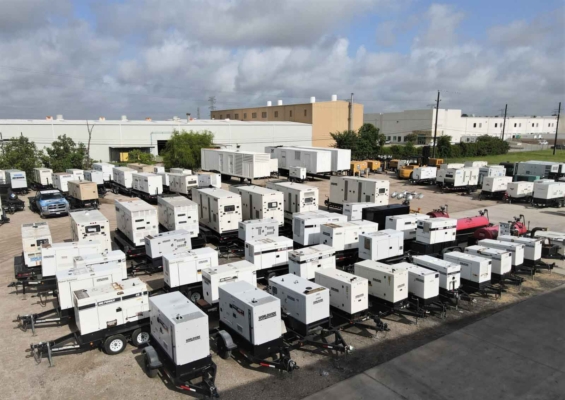
Industrial Generator Repair
Industrial generators repair service typically handle high loads, long operating hours, and high availability requirements, meaning even a minor fault can disrupt the entire operational workflow. Repair work involves more than simply replacing damaged components; it requires identifying the root cause, verifying compatibility between parts, and evaluating post-repair performance. A systematic approach helps facility managers understand equipment status, weigh repair versus replacement, and prevent recurring issues from inflating operational costs.
Identifying Faults from Early Warning Signs
Not all failures manifest as sudden shutdowns. Many problems begin with subtle indications, such as abnormal acoustic signatures, discolored exhaust smoke, progressive vibration, elevated operating temperatures, or extended cranking times. Unstable voltage and frequency outputs also serve as critical warnings that demand immediate inspection, particularly when backup power protects control systems, precision machinery, or continuous production lines. Logging these observations over time provides technicians with valuable diagnostic data to isolate root causes.
When troubleshooting industrial generators, it is essential to distinguish between symptoms and root causes. For example, difficult starting may stem from a weak battery, a malfunctioning alternator battery charger, blocked fuel lines, air ingress in the fuel system, or an inhibit signal from the controller. Replacing the battery without checking the charging system often results in a quick recurrence of the fault. Similarly, rising temperatures do not automatically indicate a failed radiator; coolant levels, drive belts, fan operation, water pumps, and core conditions must all be evaluated.
Useful operational records include the exact timestamp of the fault, load conditions at that moment, accumulated running hours, controller diagnostic messages, and recent environmental changes. Facility managers can group these symptoms before consulting technical support:
Failure to crank, weak cranking, or stalling immediately after firing.
Voltage or frequency fluctuations, or sudden tripping of connected loads.
Visible smoke, fuel odor, abnormal mechanical knocking, severe vibration, or fluid leaks.
Temperatures, oil pressures, or controller alarms exceeding preset thresholds.
Specific information streamlines diagnosis and reduces guesswork. However, operators must not attempt to disassemble hot components, open high-pressure fuel systems, or intervene in electrical panels without proper lockout/tagout (LOTO) procedures. Safety always supersedes speed, as incorrect handling can easily escalate a minor issue into a major failure.
Controlled Diagnostic and Remediation Workflow
A logical repair process typically begins by reviewing symptoms and maintenance history, followed by visual inspection, controller data extraction, and parametric measurements. Depending on the symptoms, technicians test the starting circuit, fuel supply lines, filtration systems, lubrication, cooling loops, alternator windings, Automatic Voltage Regulators (AVRs), and wiring harnesses. The objective is not to check every component blindly, but to formulate hypotheses and confirm them through targeted measurements, preventing speculative parts replacement.
Once the root cause is identified, the service provider should explain the scope of work, component status, and corrective action plan for management approval. Some issues require only cleaning, terminal retorquing, or parameter calibration; others necessitate component replacement, engine overhaul, or alternator rewinding. Decisions to repair or replace should rely on the degree of wear, remaining service life, parts availability, and downtime costs rather than raw spare-part pricing alone. A transparent quotation ensures enterprises understand precisely what work is being performed.
Upon completion, the generator must undergo load bank or live-load testing under controlled conditions. Technicians monitor starting behavior, voltage, frequency, oil pressure, temperature, acoustic profile, and transient stability during load steps. If the generator integrates with an Automatic Transfer Switch (ATS), the transfer logic must be verified against approved configurations. The handover report should record completed tasks, replaced parts, baseline parameters, and future maintenance recommendations, providing the operations team with a clear record of what was serviced and what requires monitoring.
A critical perspective is that completing a repair does not mean risk has been eliminated. If the underlying cause involves dust, humidity, poor ventilation, degraded stored fuel, or inappropriate exercising schedules, faults can reoccur even with new parts installed. Businesses should treat every incident as an opportunity to review operating conditions. A chronological maintenance log with real-world parameters is far more valuable than generic notes like “unit operating normally,” as it helps detect degradation trends before equipment failure occurs.
Industrial Generator Repair in Ho Chi Minh City (HCMC)
Ho Chi Minh City concentrates numerous factories, high-rises, hospitals, commercial complexes, logistics hubs, and service facilities reliant on dependable backup power. The realities of a dense urban environment—such as site access times, engine room locations, entry regulations, and ventilation constraints—directly impact repair logistics. Consequently, sourcing industrial generator repair in HCMC requires evaluating not just response speed, but also diagnostic capabilities, workflow organization, and coordination with on-site facility teams.
Urban Troubleshooting Challenges
In urban facilities, generators are often housed in basements, rooftop technical rooms, or confined acoustic enclosures. Restricted working spaces complicate the removal of heavy assemblies, the deployment of diagnostic instruments, and spare parts handling compared to spacious industrial plants. Before dispatching technicians, service providers should gather unit models, power ratings, installation locations, and fault symptoms. Proper preparation of tools, PPE, and access plans minimizes on-site downtime, especially when power must be restored under tight SLAs.
Urban environments also introduce unique operating factors. Construction dust, basement humidity, trapped heat from restricted ventilation, and accumulated oil mist create harsh working conditions. Some plant rooms retrofitted into building footprints lack optimized air intake, exhaust, or ducting paths. During repairs, technicians must assess the surrounding environment, as fouled air filters or high ambient temperatures can trigger fault codes even without critical mechanical failure. Mitigating environmental root causes reduces repeat failures.
Coordination requirements are equally vital. In hospitals, data centers, and multi-story commercial buildings, load testing or power switching demands multi-departmental clearance. Facility managers must coordinate operation scopes, scheduled windows, and load protection protocols. Experienced service providers discuss these protocols before disconnecting or testing systems to prevent disruptions to critical loads. Professional competency encompasses adherence to client operational procedures, not just mechanical proficiency.
Selection Criteria for HCMC Service Providers
When selecting a service provider, enterprises should prioritize vendors capable of on-site verification, clear diagnostic justification, and transparent work scopes. Quotations must itemize inspection labor, estimated replacement parts, contingency conditions, and post-repair testing protocols. If a quote consists of a single lump sum without identifying the underlying issue, management cannot evaluate its technical suitability. Transparent early communication aligns expectations and minimizes disputes during handover.
Facility managers should also verify experience with the specific engine, alternator, and controller brands installed, rather than relying on generic marketing claims. Spare parts must feature clear identification, traceable supply chains, and manufacturer compliance. Compatible components are defined by more than physical dimensions; electrical characteristics, thermal ratings, operating parameters, and OEM specifications are equally critical. If workshop-level overhaul is required, the provider must outline transport logistics, expected timelines, and equipment protection measures during teardown.
Another core criterion is post-service documentation. Handover reports documenting serial numbers, operating hours, detected faults, replaced items, and test results establish an audited history. Large facilities can standardize reporting templates for internal maintenance and auditing. Treating documentation as an integral service deliverable rather than an administrative afterthought equips operations teams to monitor critical warnings and pass accurate handover notes to subsequent shifts.
From a cost-management perspective, choosing the closest vendor is not always optimal if they lack the expertise to resolve the root cause. Conversely, a highly structured provider without clear response timeframes may not suit mission-critical assets. Organizations must balance urgency, response capability, configuration experience, and post-repair quality. Establishing a service relationship before an emergency occurs—by sharing equipment records, defining communication channels, and scheduling routine inspections—transforms crisis response into a controlled management workflow.
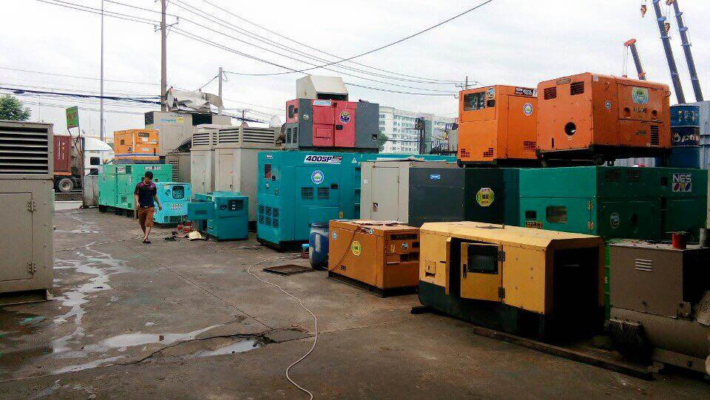
Industrial Generator Repair in Binh Duong
Binh Duong features a dense concentration of industrial zones, manufacturing plants, warehouses, and logistics centers, many operating variable shift or seasonal load profiles. When a backup asset fails to ready itself, the impact can ripple from local machine stoppages to shipment delays or spoiled perishable goods. Therefore, industrial generator repair in Binh Duong must be framed within the context of facility operations: resolving faults while simultaneously evaluating how the generator is utilized and its alignment with real-world loads.
Load Pressures and Factory Environments
In manufacturing plants, electrical loads fluctuate rapidly when multiple heavy motors start simultaneously. Industrial drives, compressors, pumps, and heating systems exhibit distinct starting characteristics, forcing generators to manage transient loads far different from steady-state baselines. If a generator was selected with insufficient reserve capacity or poor load distribution, voltage sags, frequency hunting, and controller alarms will occur. Diagnostics must cross-reference generator performance with load logs and startup schedules rather than evaluating the unit solely at no-load.
Factory environments also heavily influence equipment lifespan. Fine dust, metal shavings, oil mist, and elevated ambient temperatures foul air filters, coat radiator fins, and degrade heat dissipation efficiency. Structural vibrations from foundations or adjacent machinery can loosen fasteners and electrical terminals over time. A generator maintained in a clean environment requires a different inspection cycle than one installed beside heavy machining or abrasive processing lines. Technicians must inspect installation surroundings—air intakes, exhaust ducting, and foundation integrity—rather than merely opening engine access panels.
Shift-based manufacturing operations present another challenge: maintenance windows are exceptionally brief and must coordinate with production schedules. Service providers must align access times, work permits, and energy isolation (LOTO) protocols with safety departments. If load testing is required, approved load steps and responsible signatories must be confirmed in advance. Clear planning prevents interference during peak production hours and minimizes risks to active manufacturing lines.
Integrating Repair with Production Maintenance
Every repair request should prompt a root-cause question: Could this failure have been prevented by modifying the maintenance regime? If filters constantly foul, the intake environment or replacement interval requires review. If starter batteries repeatedly weaken during standby periods, the battery charger and exercise schedule need auditing. If high-temperature alarms trigger under heavy loads, core cooling capacity, airflow, coolant chemistry, and actual load profiles must be assessed. These measures do not replace repairs, but they eliminate the conditions that drive repeat failures.
Organizations can categorize generators by criticality rather than applying a uniform inspection schedule to all assets. Backup units supporting vital production lines demand tighter monitoring than auxiliary loads. Key metrics should be recorded consistently: operating hours, test run parameters, alarm codes, battery health checks, fluid levels, and leak inspections. Simple, disciplined data capture enables trend analysis across maintenance cycles, enabling preemptive parts procurement and scheduled interventions before unexpected shutdowns occur.
When engaging industrial generator repair in Binh Duong, facilities should evaluate the provider’s ability to coordinate with production, safety, and internal maintenance teams. Post-repair reports must explicitly state test conditions, applied loads, and testing limitations (e.g., testing restricted to no-load due to production constraints). Transparency regarding limitations prevents confusion between “the engine runs” and “the generator has proven its ability to support stable loads.”
A proactive mindset dictates waiting for a blackout to reveal hidden generator flaws is a costly gamble. Supervised periodic exercise runs, transfer switch testing, and load evaluations identify vulnerabilities while time permits controlled remediation. When faults occur, logging warning codes and operating conditions immediately beforehand provides field technicians with invaluable data. Proactive management turns generator repair from emergency firefighting into a systematic component of business continuity planning.
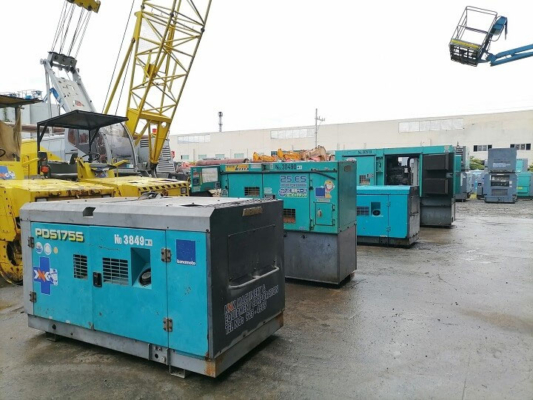
Industrial Generator Repair in Dong Nai
Dong Nai hosts numerous industrial parks, processing plants, distribution centers, and businesses integrated into regional supply chains. Generators here serve both emergency backup functions and specialized peak-shaving or continuous-duty roles under demanding operational conditions. Geographic spread, shift schedules, and spare-parts logistics make pre-repair preparation vital. Sourcing industrial generator repair in Dong Nai starts with defining precise facility requirements rather than relying on generic guarantees of speed or low pricing.
Tailoring Plans to Location and Application
Each facility in Dong Nai presents unique constraints regarding access roads, equipment room layouts, production shutdown windows, and safety compliance. Deeply recessed industrial park locations often require advance registration of personnel, tools, and service vehicles. If equipment status is unclear, sending photos of data plates, control panels, installation layouts, and fault displays helps service teams prepare appropriate diagnostic hardware. While this remote triage does not replace physical inspection, it shortens baseline data gathering upon arrival.
Utilization intensity dictates repair strategies. Units running continuously experience different wear patterns than standby units, while units exposed to high humidity environments often suffer from terminal oxidation, battery degradation, or fuel stiction. Facilities managing multiple synchronized generator sets must account for paralleling busbars and control logic. Technicians must understand system configurations to operate safely without drawing conclusions beyond verified test data.
Spare parts availability and lead times must be addressed immediately during diagnosis. Not all specialized part numbers are stocked locally; therefore, enterprises should request details regarding interchangeable components, estimated delivery timelines, and approved temporary workarounds. Temporary measures must never compromise engineering limits or safety margins. For critical applications, management should arrange alternate power redundancy during lead-time windows rather than relying solely on estimated repair durations.
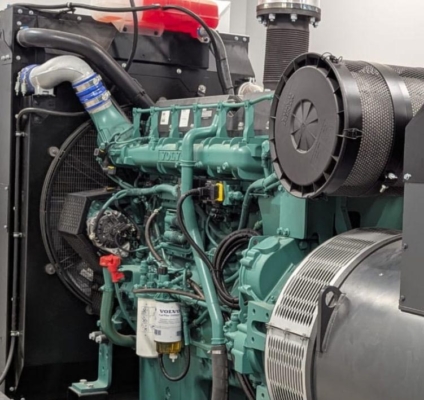
Read more: Volvo TAD1642GE doesn’t get tired just keeps running
Quality Control and Prevention of Recurrence
Repair outcomes must be validated through testing aligned with the service scope. Starting system repairs require crank and stability validation; alternator or AVR interventions demand electrical parameter verification under test loads; cooling system work requires sustained temperature profiling. Because no single test protocol fits all faults, service reports must explicitly document testing methodology. This documentation ensures accountable handover and aligns operator expectations with verified performance boundaries.
Post-handover, on-site personnel should be briefed on monitoring parameters relevant to the resolved fault. This does not mean operators perform maintenance; rather, they learn to recognize warning signs, record fault codes, and contact technicians promptly. For instance, following fuel system service, operators should monitor for pressure drops or weeping lines; following thermal interventions, coolant levels and temperature trends require closer tracking. Structured handovers transfer technical awareness, reducing reliance on individual memory.
To suppress recurring failures, facilities should maintain comprehensive equipment histories covering configuration data, repair logs, replaced parts, run hours, and test results. Multi-unit sites benefit from individualized asset histories to identify chronic outliers and analyze whether failures stem from installation placement or duty-cycle mismatches. Consistent historical tracking supports realistic maintenance budgeting and accurate lifecycle management.
When engaging industrial generator repair in Dong Nai, businesses should evaluate post-service support capabilities. Service warranties must clearly define scope, duration, and applicability conditions. Documenting service sheets, test reports, and technical communications safeguards asset integrity. If symptoms reappear, detailed records of when and under what conditions they occurred accelerate troubleshooting. A structured communication protocol does not eliminate mechanical wear, but it ensures industrial power assets are managed transparently, consistently, and with engineering rigor.
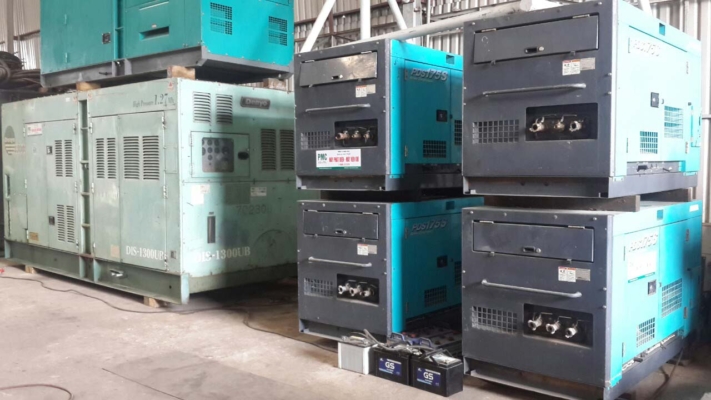
Conclusion
Effective industrial generator repair begins with accurate symptom logging, rigorous root-cause diagnosis, safe remediation, and validation testing under controlled conditions. Whether seeking service in Ho Chi Minh City, Binh Duong, or Dong Nai, enterprises should partner with providers who offer transparent workflows, traceable parts, and thorough documentation while maintaining routine preventative maintenance to minimize operational downtime.
Company name:
TTTT GLOBAL co Ltd,.
- Address: Landmark 4 Building, Vinhomes Central Park, 720A Dien Bien Phu Str, Ward 22, Binh Thanh District, Ho Chi Minh City, Vietnam.
- Website: https://ttttglobal.com/en/
- Hotline: +84286 2728 334
- Email: Info@ttttglobal.com