

 Tiếng Việt
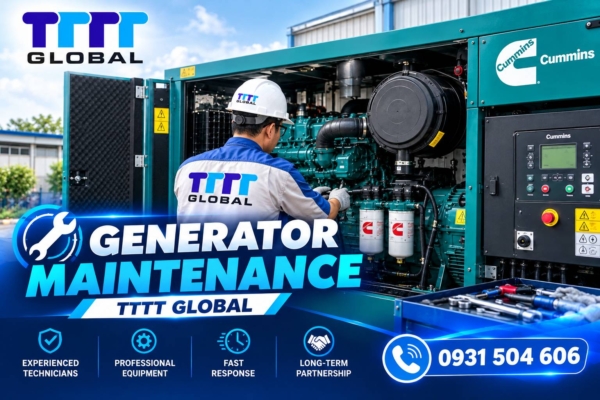
Generator maintenance is essential for ensuring reliable power generation, reducing unexpected breakdowns, improving operating efficiency, and extending the service life of industrial generators. For factories, manufacturing facilities, commercial buildings, hospitals, construction sites, and data centers, a properly maintained generator helps ensure that backup power is available when it is needed most.
TTTT Global provides generator maintenance consultation, preventive maintenance, equipment inspection, troubleshooting, and generator repair services tailored to customers’ operating requirements. Our maintenance approach focuses on identifying potential problems early, evaluating equipment conditions, and recommending appropriate maintenance solutions to help businesses maintain reliable power systems.
Whether you operate a Cummins, Volvo Penta, Perkins, Baudouin, FPT, or another generator brand, regular generator maintenance is an important part of managing equipment performance and minimizing the risk of unexpected downtime.
Contact TTTT Global for generator maintenance consultation.
- Company: TTTT Global Company Limited
- Phone: 0931 504 606
What Is Generator Maintenance?
Generator maintenance refers to a series of inspection, servicing, cleaning, testing, and component replacement activities designed to keep a generator set in suitable operating condition.
A typical generator set consists of a diesel or gas engine, an alternator, a control panel, a cooling system, a lubrication system, a fuel system, a starting system, and electrical protection components. Depending on the installation, it may also include an automatic transfer switch (ATS), a battery charger, a remote monitoring system, and other accessories.
Each component plays an important role in the overall performance of the generator. If one component fails or operates outside its intended parameters, the entire power generation system may be affected.
Professional generator maintenance helps identify these issues before they develop into more serious problems. Maintenance activities may include checking engine oil, replacing filters, inspecting coolant, testing batteries, checking electrical connections, reviewing controller alarms, and evaluating generator output.
Preventive Generator Maintenance
Preventive generator maintenance is performed according to a planned schedule based on the manufacturer’s recommendations, operating hours, equipment condition, and installation environment.
The purpose of preventive generator maintenance is to reduce the likelihood of equipment failure rather than waiting until a breakdown occurs.
Typical preventive maintenance activities include:
- Inspecting the generator set and surrounding installation area.
- Checking engine oil and coolant levels.
- Inspecting or replacing oil, fuel, and air filters as required.
- Checking the battery and starting system.
- Inspecting belts, hoses, and visible connections.
- Checking for fuel, oil, or coolant leaks.
- Reviewing controller alarms and operating records.
- Testing generator operation according to the approved maintenance plan.
A preventive generator maintenance program helps businesses manage maintenance costs and improve equipment readiness.
Corrective Maintenance and Generator Repair
Corrective maintenance is required when a generator develops a fault or when an inspection identifies a component that cannot continue operating reliably.
Examples include a failed starter motor, a malfunctioning voltage regulator, a damaged hose, a defective sensor, or an electrical connection that requires repair.
Corrective maintenance differs from routine generator maintenance because additional troubleshooting, parts replacement, or specialized testing may be necessary.
TTTT Global can help customers assess generator problems and determine whether routine servicing, component replacement, or more extensive generator repair is appropriate. The recommended scope of work depends on the actual equipment condition and the technical requirements of the generator model.
Why Is Regular Generator Maintenance Important?
Regular generator maintenance is important because generators may need to operate during power outages, production interruptions, emergency situations, or periods of unstable grid supply.
A generator that has not been maintained properly may fail to start, produce unstable voltage, overheat, or stop unexpectedly when electrical demand is high.
Improve Generator Reliability
One of the main objectives of generator maintenance is to improve equipment reliability.
Routine inspections can identify early warning signs such as abnormal vibration, loose connections, deteriorated hoses, low fluid levels, or unusual controller alarms.
Addressing these conditions before they become severe helps reduce the risk of unexpected equipment failure.
For facilities that depend on continuous power, generator maintenance should be treated as an essential part of operational planning rather than an occasional activity.
Reduce Unexpected Downtime
Unexpected generator failure can interrupt production, delay construction work, affect building operations, and create additional costs.
A planned generator maintenance schedule allows equipment owners to identify maintenance requirements in advance and arrange service during suitable periods.
For industrial facilities, regular generator maintenance can support better coordination between maintenance teams, production departments, and facility managers.
Extend Generator Service Life
Engines, alternators, cooling systems, and electrical components are subject to wear during operation.
Contaminated oil, restricted airflow, deteriorated coolant, poor electrical connections, and unsuitable operating conditions can contribute to premature component wear.
Generator maintenance helps monitor these conditions and ensures that required servicing is performed according to the applicable technical recommendations.
Although maintenance cannot eliminate all equipment failures, it can help reduce avoidable wear and support a longer service life.
Monitor Fuel Consumption and Operating Efficiency
Fuel consumption depends on generator capacity, engine design, electrical load, operating temperature, fuel quality, and maintenance condition.
An increase in fuel consumption under comparable operating conditions may indicate a problem that requires investigation.
Generator maintenance can include reviewing fuel consumption records, checking air and fuel filters, inspecting the fuel system, and evaluating engine performance.
However, fuel consumption should always be assessed against the manufacturer’s data and the actual operating load. Maintenance alone cannot guarantee a specific percentage of fuel savings.
Improve Operational Safety
Generators combine mechanical equipment, fuel systems, hot surfaces, rotating components, and potentially hazardous electrical circuits.
A proper generator maintenance program includes inspections designed to identify unsafe conditions, such as fuel leaks, damaged cables, overheating connections, defective protective devices, or blocked ventilation.
Electrical and mechanical maintenance should be performed by qualified personnel following appropriate isolation, lockout, and safety procedures.
Comprehensive Generator Maintenance Services by TTTT Global
TTTT Global provides consultation on generator inspection, maintenance, servicing, and repair according to the equipment model, operating environment, and customer requirements.
The actual maintenance scope should be confirmed after reviewing the generator’s condition and the manufacturer’s recommendations.
Engine Inspection and Maintenance
The engine is the primary mechanical component of a generator set. Its condition directly affects starting performance, power output, operating stability, and fuel consumption.
Engine generator maintenance may include:
- Checking engine oil level and condition.
- Inspecting the lubrication system for visible leaks.
- Checking the condition of hoses, belts, and accessible connections.
- Inspecting the intake system and air filter.
- Reviewing engine temperature and oil pressure readings.
- Checking unusual noise, vibration, or exhaust conditions.
- Reviewing engine controller warnings and fault codes.
- Recommending oil and filter replacement when required.
Engine oil and filter replacement intervals should follow the applicable engine manufacturer’s instructions. The correct oil specification, filter type, and service interval must be verified for the particular engine model.
If the engine shows persistent low oil pressure, severe overheating, abnormal mechanical noise, or another critical warning, the generator should be stopped according to the applicable safety procedure and inspected before further operation.
Fuel System Inspection and Maintenance
The fuel system supplies the engine with the fuel required for stable combustion and power generation.
Problems in the fuel system can cause difficult starting, unstable engine speed, reduced output, or abnormal exhaust emissions.
Generator maintenance for the fuel system may include:
- Inspecting the fuel tank and accessible fuel lines.
- Checking for leaks at pipes, hoses, and connections.
- Inspecting fuel filters and water separators where fitted.
- Checking fuel quality and possible contamination.
- Reviewing fuel supply conditions.
- Investigating fuel system alarms or abnormal engine performance.
Diesel fuel can deteriorate during prolonged storage, and water or contaminants may affect engine operation. Fuel storage and treatment should follow the engine manufacturer’s requirements and applicable safety standards.
Fuel injection pumps and injectors may require specialized diagnostic equipment. These components should be inspected or repaired by qualified technicians when symptoms indicate a possible fault.
Cooling System Maintenance
The cooling system maintains engine temperature within the manufacturer’s specified operating range.
An ineffective cooling system can cause overheating, reduced engine performance, automatic shutdown, or serious engine damage.
Generator maintenance for the cooling system may include:
- Checking coolant level and condition.
- Inspecting the radiator and cooling passages.
- Checking coolant hoses and clamps.
- Inspecting the fan and belt drive where applicable.
- Checking for coolant leaks.
- Reviewing temperature readings and alarms.
- Cleaning radiator surfaces when necessary.
- Investigating thermostat, water pump, or circulation problems when indicated.
The correct coolant type and replacement interval must be confirmed from the engine manufacturer’s documentation.
The radiator cap must not be opened while the engine is hot or the cooling system is pressurized. Maintenance personnel should allow the system to cool and follow the appropriate safety procedure before carrying out service work.
Lubrication System Maintenance
The lubrication system reduces friction between moving engine components and helps control wear and operating temperature.
Poor lubrication can result in accelerated engine wear and, in severe cases, major mechanical damage.
Generator maintenance for the lubrication system includes checking oil level, examining visible leaks, inspecting the oil filter, and reviewing oil pressure readings.
Oil replacement should be performed using the correct lubricant specification and service interval for the engine.
If the oil appears contaminated, the oil pressure is abnormal, or the engine repeatedly reports a lubrication warning, the cause should be investigated rather than simply adding oil and continuing operation.
Alternator Inspection and Maintenance
The alternator converts mechanical energy from the engine into electrical energy.
Its condition affects voltage quality, insulation integrity, electrical output, and overall generator performance.
Alternator maintenance may include:
- Inspecting the alternator housing and ventilation openings.
- Checking accessible electrical connections.
- Inspecting for signs of overheating or discoloration.
- Checking for abnormal noise and vibration.
- Evaluating insulation resistance using an appropriate procedure.
- Checking the automatic voltage regulator (AVR) when voltage problems are reported.
- Measuring generator voltage and frequency.
- Reviewing output performance under approved test conditions.
Insulation testing must be conducted using the correct procedure and test voltage for the equipment. Sensitive electronic devices and control components may need to be isolated before testing.
If a generator produces unstable voltage, the cause may involve the AVR, sensing circuits, engine speed, wiring, load conditions, or alternator components. Accurate diagnosis is necessary before replacing parts.
Battery and Starting System Maintenance
The starting system enables the generator engine to start when required.
A weak battery, faulty charger, loose terminal, or defective starter motor can prevent a generator from starting during a power outage.
Battery and starting system maintenance may include:
- Measuring battery voltage.
- Checking battery condition and terminals.
- Inspecting battery cables and connections.
- Checking the battery charger.
- Inspecting the starter motor and starting circuit.
- Reviewing low-battery-voltage alarms.
- Verifying the starting sequence where appropriate.
Battery maintenance requirements vary according to battery type and manufacturer instructions.
Battery terminals should be handled with suitable protective equipment, and charging or testing should be carried out in a properly ventilated area following the applicable safety procedures.
Control Panel Inspection
The generator control panel monitors important operating parameters and may provide automatic shutdown protection when a fault occurs.
Depending on the controller, monitored parameters may include engine speed, coolant temperature, oil pressure, battery voltage, generator voltage, frequency, and electrical load.
Generator maintenance for the control panel may include:
- Checking displayed operating parameters.
- Reviewing active alarms and stored fault codes.
- Inspecting accessible wiring and connectors.
- Checking sensor signals where necessary.
- Verifying operating modes and settings against approved requirements.
- Investigating communication or monitoring problems.
Control panel settings should not be changed without understanding the equipment configuration and protection requirements. Incorrect settings may affect generator operation or compromise equipment protection.
Automatic Transfer Switch (ATS) Maintenance
An automatic transfer switch transfers an electrical load between the normal power source and a standby generator according to its configuration.
For facilities that rely on automatic backup power, ATS maintenance is an important part of the overall generator maintenance program.
Typical inspection activities may include:
- Checking the ATS enclosure and accessible connections.
- Inspecting the condition of switching components.
- Reviewing controller alarms and status indicators.
- Checking control wiring and signal connections.
- Verifying the configured transfer sequence.
- Testing operation under an approved maintenance plan.
ATS testing may interrupt the normal power supply or affect connected loads. Testing must therefore be planned and performed by qualified personnel using an approved switching procedure.
Exhaust System and Ventilation Inspection
The exhaust system removes engine exhaust gases, while the ventilation system helps provide the airflow needed for cooling and combustion.
Blocked airflow or damaged exhaust components may affect generator performance and create safety risks.
Generator maintenance may include checking visible exhaust pipes, flexible connections, silencers, ventilation openings, and signs of leakage or corrosion.
The generator room should have suitable ventilation and exhaust arrangements in accordance with the installation design and applicable safety requirements.
Exhaust gases contain carbon monoxide, which is dangerous and potentially fatal. Generators must not be operated in enclosed or inadequately ventilated spaces unless the installation has been specifically designed and approved for that use.
Generator Enclosure and General Condition
The generator enclosure protects equipment against environmental exposure, helps control noise, and provides access to service components.
Routine inspection may include checking enclosure panels, door seals, ventilation openings, mounting points, visible corrosion, and accumulated dust or debris.
For outdoor installations, maintenance personnel should also assess exposure to rain, humidity, flooding, and other environmental conditions.
Keeping the generator area clean and accessible helps improve inspection quality and supports safer maintenance work.
Generator Maintenance Procedure at TTTT Global
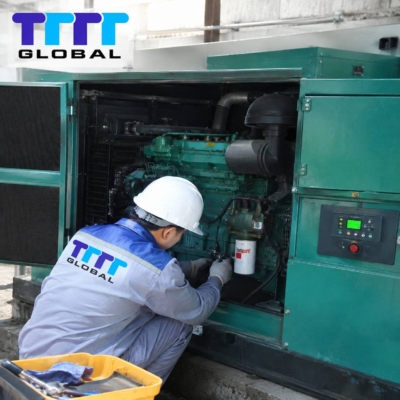
A structured generator maintenance procedure helps ensure that inspections and servicing activities are performed consistently and documented properly.
Step 1 – Collect Generator Information
Before planning maintenance, the service provider should collect essential equipment information, including:
- Generator brand and model.
- Rated and standby power capacity.
- Engine model and alternator model.
- Generator location.
- Operating hours, if available.
- Previous maintenance records.
- Current operating problems or warning messages.
- Required maintenance scope and operating schedule.
Photographs of the generator nameplate and control panel can help identify the equipment more accurately.
Step 2 – Inspect the Generator Condition
The next step is to assess the generator’s general condition and identify potential maintenance requirements.
The inspection may cover the engine, alternator, fuel system, lubrication system, cooling system, battery, control panel, ATS, and visible electrical connections.
The extent of the inspection depends on the equipment condition, site access, and agreed scope of work.
Step 3 – Prepare the Maintenance Plan
Based on the available information, the maintenance plan identifies the work to be performed, consumables required, possible spare parts, testing requirements, and estimated service duration.
If additional faults are identified, the service provider should explain the findings and obtain the customer’s approval before carrying out work outside the agreed scope.
Step 4 – Perform Generator Maintenance
Maintenance personnel perform the approved work using appropriate tools, replacement parts, and procedures.
Depending on the maintenance plan, this may include cleaning, inspection, oil and filter replacement, battery checks, cooling system inspection, electrical testing, and other servicing tasks.
All work should follow the applicable manufacturer instructions and site safety requirements.
Step 5 – Conduct Operational Checks
After maintenance, the generator should be checked to verify that the completed work has been performed correctly.
Post-maintenance checks may include inspecting for leaks, checking operating parameters, reviewing controller alarms, and confirming that the generator starts and runs as expected.
A no-load test, load test, or ATS functional test should be performed only when appropriate for the equipment, the agreed scope, and the site’s approved operating procedures.
Step 6 – Record Results and Recommend Follow-Up Maintenance
The final step is to document the maintenance work and communicate the generator’s condition to the customer.
A maintenance report may record completed tasks, replaced consumables, observed defects, test results, and recommended follow-up actions.
Keeping accurate records makes it easier to plan future generator maintenance and track recurring problems.
How Often Should Generator Maintenance Be Performed?
Generator maintenance intervals depend on the engine model, generator configuration, operating hours, environmental conditions, and manufacturer’s recommendations.
There is no single maintenance interval suitable for every generator.
Daily or Pre-Start Checks
For generators used frequently or required for critical backup applications, operators may need to perform routine visual checks before operation or according to the facility’s operating procedure.
These checks may include:
- Looking for visible leaks.
- Checking fluid levels where required.
- Confirming that the generator area is clear.
- Checking controller status and alarms.
- Observing battery charger indicators.
- Confirming that ventilation openings are unobstructed.
Operators should only perform checks for which they are trained and authorized.
Periodic Preventive Maintenance
Periodic generator maintenance may include more detailed inspections, servicing, filter replacement, electrical checks, and operational testing.
The timing should follow the manufacturer’s schedule and consider the actual operating hours and equipment condition.
Generators operating in dusty, hot, humid, or corrosive environments may require more frequent inspections than equipment installed in cleaner conditions.
Maintenance After Extended Storage
A generator that has remained unused for an extended period may still develop problems involving the battery, fuel, seals, electrical connections, or cooling system.
Before returning the equipment to service, the responsible personnel should review the maintenance history, inspect the generator, and perform the checks recommended by the manufacturer.
If the generator is used as emergency backup equipment, its readiness should be verified through an approved testing program.
Maintenance After a Fault or Abnormal Event
Additional inspection may be necessary after overheating, low oil pressure, abnormal vibration, water ingress, fuel contamination, an electrical fault, or an unexpected shutdown.
The root cause should be identified before the generator returns to normal operation if the fault could affect safety or reliability.
Common Generator Problems That Require Maintenance
Understanding common generator problems helps operators recognize when professional inspection may be necessary.
Generator Fails to Start
Possible causes include a weak battery, a faulty starter motor, insufficient fuel supply, blocked filters, a defective sensor, or a controller interlock.
Generator maintenance should begin with a review of the alarm information and a systematic inspection of the starting system and fuel supply.
Generator Overheating
Overheating may be related to low coolant, radiator obstruction, a damaged fan belt, a faulty thermostat, poor ventilation, or excessive load.
The cooling system and operating conditions should be evaluated before the generator is returned to service.
Low Oil Pressure
Low oil pressure may result from insufficient oil, an oil leak, an unsuitable lubricant, a blocked filter, a worn component, or a sensor problem.
Because low oil pressure can lead to severe engine damage, the warning should not be ignored. Follow the manufacturer’s shutdown procedure and arrange a technical inspection.
Unstable Voltage or Frequency
Unstable voltage or frequency can result from changing load, engine speed problems, AVR faults, wiring issues, sensing errors, or alternator defects.
A qualified technician should check operating conditions and electrical measurements before deciding on the necessary repair.
Excessive Fuel Consumption
Fuel consumption varies with load, engine condition, operating temperature, and generator design.
If fuel consumption increases under comparable conditions, the maintenance assessment may include air and fuel filters, fuel supply, engine operating parameters, and the actual electrical load.
Abnormal Noise or Vibration
Abnormal noise or vibration may indicate loose mounting hardware, worn bearings, misalignment, damaged components, or an engine-related problem.
The generator should be inspected promptly, particularly if the noise is sudden, severe, or accompanied by a warning or change in performance.
Frequent Controller Alarms
Repeated alarms can indicate a persistent fault, a sensor issue, unsuitable operating conditions, or a configuration problem.
Maintenance personnel should review the alarm history and verify the underlying cause rather than simply resetting the controller.
Generator Maintenance for Different Brands
Generator maintenance requirements vary according to the engine manufacturer, alternator design, control system, and generator configuration.
TTTT Global can assess maintenance requirements based on the customer’s equipment information and actual service needs.
Cummins Generator Maintenance
Cummins generator maintenance may involve engine oil and filter servicing, fuel system inspection, cooling system checks, battery testing, controller diagnostics, and alternator evaluation.
The correct procedures and service intervals depend on the specific Cummins engine model and generator configuration.
If a Cummins generator experiences difficult starting, overheating, low oil pressure, or unstable output, a structured diagnostic process can help identify the source of the problem.
Volvo Penta Generator Maintenance
Volvo Penta generator maintenance should follow the service documentation for the installed engine model.
Inspection may include lubrication, cooling, fuel delivery, air intake, electrical connections, controller alarms, and operating parameters.
Correct lubricant specifications, filter references, and replacement intervals should be verified using the manufacturer’s technical information.
Perkins Generator Maintenance
Perkins generator maintenance may include routine engine servicing, filter replacement, fuel system inspection, cooling system checks, and troubleshooting of abnormal engine operation.
Maintenance planning should account for operating hours, ambient conditions, and the applicable engine service schedule.
Baudouin Generator Maintenance
Baudouin generator maintenance requires the correct model information and relevant service specifications.
Depending on the engine and application, inspection may cover lubrication, fuel supply, cooling, intake and exhaust systems, controller readings, and generator operating performance.
FPT Generator Maintenance
FPT generator maintenance should be performed according to the installed engine configuration and manufacturer requirements.
A suitable maintenance plan can include fluid and filter servicing, inspection of hoses and connections, battery checks, cooling system inspection, and troubleshooting when abnormal operating conditions occur.
Alternator and Control System Maintenance
Regardless of engine brand, the alternator, AVR, controller, and electrical protection system must be considered as part of the complete generator maintenance program.
A generator engine may operate normally while the electrical system still has a fault. For this reason, maintenance should assess the complete generator set rather than focusing only on the engine.
Generator Maintenance for Different Industries
Different industries use generators under different operating conditions. A suitable generator maintenance plan should reflect the consequences of power interruption and the installation environment.
Factory and Manufacturing Generator Maintenance
Manufacturing facilities may use generators to support production equipment, process controls, lighting, and essential services.
Maintenance planning should consider production schedules, electrical load requirements, and the consequences of an unexpected shutdown.
Commercial Building and Office Generator Maintenance
Commercial buildings may rely on generators for selected emergency systems, essential services, and backup power.
Maintenance may include engine servicing, battery checks, control panel inspection, ATS testing, and verification of the approved backup power sequence.
Hospital and Healthcare Facility Generator Maintenance
Healthcare facilities may depend on standby power for critical equipment and essential building services.
Generator maintenance should follow the facility’s approved maintenance program, applicable regulations, manufacturer requirements, and critical-power testing procedures.
Testing must be carefully coordinated to avoid compromising essential loads.
Data Center Generator Maintenance
Data centers require careful planning of backup power systems because unexpected power interruptions can affect IT equipment and business continuity.
Generator maintenance may include scheduled engine servicing, battery and charger checks, controller inspection, electrical testing, and coordinated load-bank or operational testing where required.
The maintenance plan should align with the facility’s redundancy architecture and approved change-management procedures.
Construction Site Generator Maintenance
Construction sites may expose generators to dust, vibration, moisture, frequent relocation, and changing loads.
Regular inspection of air filters, fuel lines, cables, grounding arrangements, cooling systems, and enclosure condition is especially important under these conditions.
Warehouses and Logistics Facilities
Warehouses and logistics facilities may use generators to support lighting, material-handling operations, security systems, and other essential loads.
Maintenance planning should consider operating schedules, ventilation, fuel storage, and the generator’s role in the facility’s emergency power strategy.
Factors Affecting Generator Maintenance Costs
Generator maintenance costs vary according to equipment specifications, the required service scope, and the condition of the generator.
Generator Capacity and Configuration
Generator capacity, engine model, alternator type, enclosure design, and control system affect the time and resources required for maintenance.
Larger or more complex generator systems may require additional personnel, specialized tools, or more extensive testing.
Consumables and Replacement Parts
Maintenance costs may include engine oil, filters, coolant, belts, batteries, and other consumables or replacement parts.
The quantity and specification of these materials depend on the generator model and approved maintenance scope.
Equipment Condition and Maintenance History
A generator with complete maintenance records and no significant faults may require less corrective work than a generator that has not been serviced for an extended period.
Equipment with recurring alarms, fluid leaks, or abnormal operating parameters may require additional diagnostic work.
Location and Service Requirements
The installation location, access conditions, working hours, and required testing may affect the service quotation.
For an accurate estimate, customers should provide the generator’s location, model, capacity, operating hours, and a description of the required work.
Routine Maintenance Versus Repair
Routine generator maintenance typically involves inspection, servicing, and planned replacement of consumables.
Generator repair may require troubleshooting, component removal, specialist testing, or replacement of defective parts. These activities should be identified and quoted separately when they fall outside the agreed maintenance scope.
Why Choose TTTT Global for Generator Maintenance?
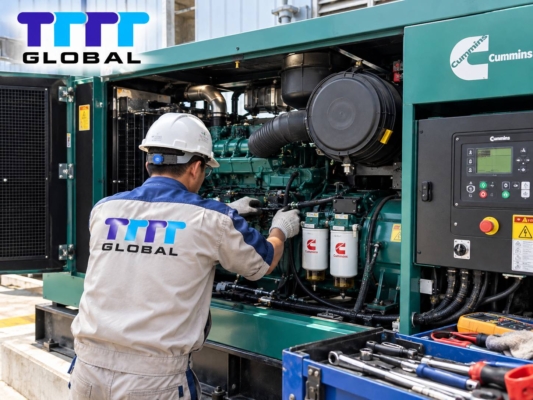
Choosing a generator maintenance provider involves more than comparing prices. Customers should consider the provider’s understanding of the equipment, clarity of the maintenance scope, safety procedures, and quality of service documentation.
TTTT Global aims to help customers assess their generator maintenance needs and identify appropriate servicing options.
Maintenance Recommendations Based on Equipment Needs
Each generator has different operating requirements. TTTT Global can review available equipment information and help identify relevant inspection and maintenance items.
This approach helps customers avoid relying on a generic maintenance checklist that may not suit their generator model.
Clear Maintenance Scope and Quotation
Before work begins, the customer should understand which inspections, servicing tasks, consumables, and tests are included.
Any additional repairs or replacement parts identified during the inspection should be discussed before the scope is expanded.
Support for Industrial Generator Applications
Industrial generators may serve as emergency backup systems or as part of a facility’s normal power arrangement.
Maintenance recommendations should consider the generator’s role, required availability, load profile, and operating environment.
Maintenance Records and Follow-Up Recommendations
Documenting completed work and identified issues helps customers manage equipment history and plan future servicing.
TTTT Global can discuss the appropriate maintenance scope and reporting requirements for each service request.
Consultation for Generator Maintenance and Repair
If a generator shows abnormal operating conditions, the first step is to collect accurate equipment information and assess the symptoms.
TTTT Global can help customers identify the information needed for an initial consultation and determine the next steps for maintenance or repair.
How to Prepare for a Generator Maintenance Service
Preparing accurate information before requesting generator maintenance can help improve the quotation process and reduce delays.
Provide the Generator Nameplate Information
Customers should provide the generator brand, model, rated capacity, voltage, frequency, and engine model when available.
A clear photograph of the nameplate is often helpful.
Describe Current Operating Conditions
Explain whether the generator is used for emergency backup, continuous operation, or periodic testing.
Include the approximate operating hours, typical load, recent maintenance history, and any recurring problems.
Provide Photographs or Alarm Information
Photographs of the generator, control panel, visible leaks, or warning messages can help the service provider understand the reported condition.
Controller fault codes should be recorded accurately where possible.
Confirm Site Access and Maintenance Requirements
Customers should clarify the installation location, site access requirements, permitted service hours, and any safety or induction procedures.
If testing may affect connected electrical loads, the maintenance work should be coordinated with the responsible facility personnel.
Generator Maintenance Checklist
The following checklist provides a general overview of items that may be included in a generator maintenance program. It is not a substitute for the maintenance schedule for the specific generator model.
Mechanical Inspection Checklist
Inspect the engine and generator enclosure.
Check engine oil level and visible oil leaks.
Inspect coolant level and cooling system condition.
Check fuel lines and accessible connections.
Inspect belts, hoses, and mounting points.
Check the air intake and air filter condition.
Observe abnormal noise or vibration.
Review operating hours and maintenance history.
Electrical Inspection Checklist
Inspect accessible cables and electrical connections.
Check battery condition and charger indicators.
Review controller alarms and operating parameters.
Check generator voltage and frequency.
Evaluate the AVR when indicated by symptoms.
Inspect the ATS according to the approved maintenance plan.
Verify protective functions using appropriate procedures.
Electrical testing and work inside energized equipment must be performed only by qualified personnel using the required safety controls.
Operational Testing Checklist
Confirm that the maintenance work has been completed.
Check for visible leaks or loose components.
Verify that relevant alarms have been investigated.
Check starting and running performance.
Record operating readings and test results.
Perform load or ATS testing where required and approved.
Document outstanding issues and follow-up actions.
Frequently Asked Questions About Generator Maintenance
Generator maintenance may include engine inspection, oil and filter servicing, fuel system checks, cooling system inspection, battery testing, alternator evaluation, controller diagnostics, and ATS inspection.
The exact scope depends on the generator model, maintenance schedule, operating condition, and customer requirements.
How Often Should a Diesel Generator Be Serviced?
The service interval depends on the manufacturer’s recommendations, engine operating hours, elapsed time, and environmental conditions.
Customers should consult the maintenance documentation for the exact engine model instead of applying the same interval to every generator.
Does a Standby Generator Need Maintenance if It Is Rarely Used?
Yes. A standby generator may develop battery, fuel, connection, or component problems even when it runs infrequently.
Periodic inspection and approved operational testing help verify that the equipment remains ready for use.
Can Generator Maintenance Reduce Fuel Consumption?
Proper maintenance can help identify conditions that contribute to inefficient operation, such as restricted air filters or fuel system problems.
However, fuel consumption also depends on generator loading, engine design, ambient conditions, and the connected equipment. Actual savings cannot be guaranteed without assessing the generator and its operating conditions.
What Is the Difference Between Generator Maintenance and Generator Repair?
Generator maintenance focuses on inspection, preventive servicing, cleaning, and planned replacement of consumables.
Generator repair focuses on diagnosing and correcting a specific fault, which may require component repair or replacement.
A maintenance inspection may identify a repair requirement, but the additional work should be assessed and agreed upon separately when necessary.
Can TTTT Global Provide Cummins Generator Maintenance?
TTTT Global can review inquiries concerning Cummins generator maintenance and assess the required service scope based on the equipment model and reported condition.
The availability of specific technical services, spare parts, and on-site support should be confirmed for each request.
What Information Is Needed for a Generator Maintenance Quotation?
Useful information includes the generator brand, model, capacity, installation location, operating hours, maintenance history, and current symptoms.
Photographs of the nameplate and control panel can help the service provider understand the equipment more accurately.
Should a Generator Be Load-Tested After Maintenance?
Load testing may be appropriate when required by the maintenance plan, manufacturer, facility procedures, or applicable standards.
The decision depends on the generator’s purpose, test conditions, connected loads, and safety requirements. Load testing should be planned and performed by qualified personnel.
Read more: Industrial Generator Repair & Maintenance Services
Contact TTTT Global for Generator Maintenance Services
Regular generator maintenance helps businesses monitor equipment condition, reduce avoidable failures, and maintain a more reliable backup power system.
Whether your facility operates a diesel generator for emergency backup, industrial production, commercial building services, or another application, a maintenance plan based on the manufacturer’s requirements and actual operating conditions is essential.
TTTT Global provides consultation for generator maintenance, preventive servicing, inspection, troubleshooting, and repair requirements. Our team can review the information you provide and help determine the appropriate next steps for your equipment.
Contact TTTT Global today to discuss your generator maintenance requirements.
TTTT GLOBAL COMPANY LIMITED
- Service: Generator maintenance, preventive maintenance, inspection, servicing, and repair consultation
- Phone: 0931 504 606
TTTT Global – Supporting reliable generator operation through appropriate maintenance and technical consultation.
Company name:
TTTT GLOBAL co Ltd,.
- Address: Landmark 4 Building, Vinhomes Central Park, 720A Dien Bien Phu Str, Ward 22, Binh Thanh District, Ho Chi Minh City, Vietnam.
- Website: https://ttttglobal.com/en/
- Hotline: +84286 2728 334
- Email: Info@ttttglobal.com